
I am 100% Ukrainian on both sides of my parental lineage. Raised in the Ukrainian Greek Orthodox Church and steeped in Ukrainian culture. It was a strong local church community with a large extended family network through heritage and marriage.
Liturgy and rituals from the cradle to the grave.
Baptism of babies had symbolic rites including ‘adoption’ by godparents.Children attended weekly Ukrainian language lessons taught by the priest. Teenagers learned Ukrainian dancing in the church hall.
All of us went through formal catechism. I even became an altar boy who assisted the priest during worship services. In early rural times, weddings lasted a whole week with elaborate rituals. Funeral wakes went for days with the body in the house then removed through a window so the spirit couldn’t find its way back into the house after burial.
Why do I share all these details?
To show that our church culture was intentional in how it did its business and nurtured the next generation. We knew why we were doing the things we did. It was to preserve our heritage, our language, our culture, our Orthodox traditions. To nurture our distinctive elements with strength and godly pride.
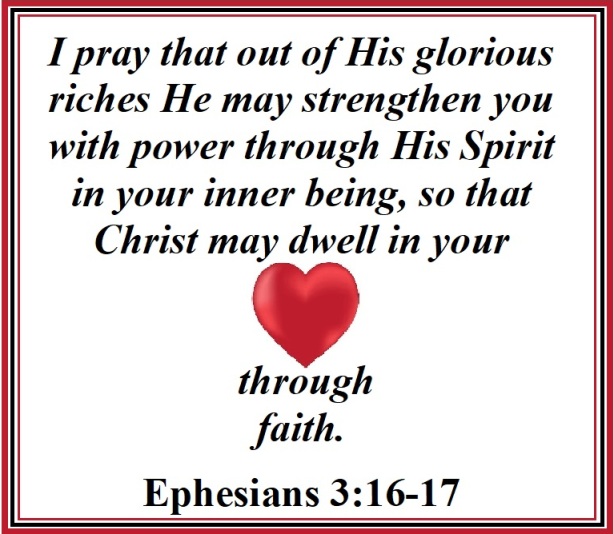
Then, when 10 or 11 years old, I went to a Salvation Army summer camp. A major focus was to encourage campers to “accept Jesus into your heart.” The camp setting made it an easy thing to do.
This was something we never did formally in the Orthodox church.
I was preoccupied with selling oranges and chocolate bars at great profit (my parents owned a grocery store). But, by end of week, I did ask Jesus into my heart.
So, what’s the problem?
No problem, really. Just no connection. No organizing context for meaningful followup. I returned home and continued my role as an altar boy, learning the Ukrainian language, and Ukrainian dancing.
Not until years later, when 18, did a more dramatic evangelical conversion experience lead me into a fuller context for followup.
An interesting contrast. When I did ask Jesus into my heart, there was no change in my life. I really didn’t understand what I was doing.
Yet in my later benchmark moment of giving myself to a Jesus faith-life, I didn’t actually say the words. But there was a depth of connection, a handshake at spirit/Spirit level, that transformed my life. And changed the trajectory of my future. At that point in time, I did understand what I was doing.
I never did like the phrase “Ask Jesus into your heart.”
That’s how I felt during the years of my participation in conservative evangelical culture. It always seemed so simplistic to me. So inadequate. So confusing. Using a metaphor with children without them really knowing what it means.
For example, a child was having bedtime prayers with their parent. “Mom, I’m not feeling very well. Can we ask Jesus to move from my heart to my stomach?”
If that conversation actually occurred, it would have been a prime opportunity for the parent to demythologize the “Jesus in my heart” syndrome.
Oops!
I have just used the word that evangelicals tossed in the face of the United Church in the 1960s when it revised Sunday school curriculum to ‘demythologize’ Bible stories taught to children. Evangelicals were aghast and horrified at the thought of ‘demythologizing.’
Yet we carried on with asking Jesus into our heart.
Do I sound bitter or angry or jaundiced?
I hope not. I am none of those. But I am serious about honesty in how these things happen in church life.
Conservatives don’t want metaphor, myth, or archetype. But they use them all the time for explaining things, for understanding non-tangible spiritual truths, for personalizing the faith.
Liberals don’t want ‘simplistic’ language. So they try to be overly comprehensive in the breadth of their expressions. A common statement in United Church literature is “We take the Bible seriously but not literally.” So it is ‘open house’ on what you do with it. Anything goes.
Some of the so-called differences between religious groups are rooted in the diverse use of language. Using different words, sometimes to explain similar things.
Kind of like the 1960s cigarette ad, “I’d rather fight than switch.” Billboards featured smokers with black eyes to demonstrate their loyalty to the charcoal filter of the Tareyton cigarette. Did anyone ever stop to say, “A cigarette is still a cigarette? They all cause cancer.”
‘Integration’ and ‘differentiation.’
Big words to throw into our discussion. But they are quite concrete. Not metaphor.
The ‘battle’ between demythologizing (liberal) and personalizing (conservative) Christianity is based in attempts to differentiate ourselves, our group, from someone else. To show how we are different. And a more subtle agenda often behind such activity is to elevate ourselves as being closer to THE truth than the other guy.
There is an alternative to the conflict that arises from such perceived differences.
Can we pull back the veil of language to see what it is that we are actually trying to describe? Is it possible there may be similarities of intent? Are we so fixated on the language that we are blind to the basic premises behind the language?
In some ways, that’s what the ecumenical movement in the church world is all about. To try to stimulate simple conversations about things we have greatly over-complicated.
An example of the challenge between differentiation and integration.
It involves attitudes towards IF Indigenous religion and culture can (or should) be integrated with Christianity. And if so, then HOW do you do it?
A conservative evangelical college had a Native Ministries training program for developing church leaders. Students came from diverse Indigenous contexts across Canada. Debate (and emotions) ran high amongst students on whether or not to recognize and integrate Indigenous practices into Christian life and worship.
For some, it was totally irreconcilable to the point of even labeling such practices as “of the Devil.” As Christians, they were ‘delivered’ from such activity. Differentiation at its most extreme. To others, there was beautiful potential for some integration. So much symbolic value in some of the Indigenous practices.
Remember, all of these students were Indigenous Bible-believing, card-carrying evangelical Christians. It made for exciting classroom sessions.
It is common to assume that what is good for us is also good for the other guy.
And, if we have the power to push it (as male-dominated structures have demonstrated), we invoke our lens of truth on those around us.
It reminds me of a news report about Liechtenstein in 1984. It was the last European country to grant women the right to vote. A television crew asked a man standing on a hillside what he thought of the resolution to grant women the vote. He replied, “I’m against it.”
You could see his wife a bit further down the hill working in the field. The interviewer asked the man what his wife thought of the resolution. He replied, “I haven’t asked her, but she’s against it too.” Need I say more?
There was a television program that eventually asked contestants, “Is that your final answer?” For those who major in differentiation, it is all too often their final answer. Not only in religion but also politics, childrearing, vaccinations, just about any aspect of life.
Another example.
Rather than administering final answers from predetermined templates, this example demonstrates the desire to be open to new learning, to allow for an expanded awareness of truth.
A conservative church congregation went through extended study (including many arguments) on a divisive issue. Participating in the process were two men, both longtime members in the local church and strong opponents to the resolution for a change in policy.
One went home after the first town hall meeting and never returned. I speculate he viewed the church as ‘going to hell in a hand basket’ just for talking about the possibility of change. His ‘final answer.’
The second man, after the congregation voted to affirm the resolution, came to the pastor. He said, “I still disagree with the result but this is our church, we aren’t going anywhere else, and I will support the decision.”
Which man do you think demonstrated a humble spirit, a willingness to learn, an openness to expand his awareness of truth? To ‘lay down’ self and allow for integration in the name of unity.
There is nothing wrong with asking Jesus into your heart.
If that is your church context. But you should know that, in the conservative evangelical culture, Jesus doesn’t want just your heart. He wants all of you. Your head, your hands, your feet. In fact, there may be less evangelical scandals if leaders moved Jesus from their heart to their head.
Do you see the language I’m using here? It’s consistent with the meanings which the evangelical group attach to their words. Again, no problem. The problem starts when there is no instructional followup to explain what you mean. Or when you use that ‘clubhouse’ language with other people who aren’t aligned with your group.
Don’t be surprised if someone says, “I don’t know what you’re talking about. Would you please demythologize what you just said.”
I still run with those who want a Jesus-based faith life.
But I’m not content with all the differentiation that has governed so much of my life. It is refreshing and liberating to expand my awareness of potential avenues for integration.
One recurring theme for me is the relationship between Christianity and Indigenous religious beliefs and rites.
A timely encounter.
Walking on a sandy beach, I heard a light drum beat and saw a man and woman standing on the shore. As I approached, he stopped drumming and even shifted to hold the small round drum behind his back. It seemed an act of humility to show no offence to me. Respectfully, I asked what they were doing.
Darrell and Barbara are an Indigenous couple, ‘people of the water’ from an oceanside reservation* in northern Washington state. They were having evening prayers as the incoming tide once again revealed the rhythms of Creation.
I am glad I went for that walk and felt the freedom to approach them. Our time together became an act of fellowship, prayer, and worship. [*Note – in the U.S.A., native lands are still called ‘reservations.’]
But that is another story. (see April 15, 2026)